
A brown stain spreading across the lounge room ceiling. Paint bubbling above the bathroom door. A soft, sagging patch that wasn’t there last week. If you’ve spotted any of these, you’re probably wondering two things: how bad is it, and what will it take to fix?
The good news is that most water-damaged ceilings can be repaired properly, and often without replacing the whole ceiling. In this guide, we explain how professional gyprock ceiling repairs Sydney homeowners rely on actually work, from the first inspection to the final sand, so you know exactly what to expect.
Got a damaged ceiling right now? Call Smith Plastering & Renovations on 0448 855 372orrequest a free, no-obligation quote today.
Why Sydney Ceilings Get Water Damage
Sydney’s climate is tough on ceilings. Heavy rain, summer storms and high humidity all put pressure on roofs, gutters and flashing. Over time, a cracked roof tile, a blocked gutter or a worn seal can let water creep into the ceiling cavity without you noticing.
Inside the home, the causes are just as common. A leaking shower upstairs in a unit, a slow plumbing leak, a burst pipe or condensation trapped in a poorly ventilated roof space can all soak plasterboard from above. Gyprock is made of a gypsum core wrapped in paper, and it absorbs moisture quickly. Once it’s wet, it weakens, stains and can eventually collapse.
Signs Your Ceiling Has Water Damage
Catching the problem early keeps the repair smaller and the cost lower. Look out for:
- Yellow, brown or grey stains, often with a darker ring around the edge
- Bubbling, peeling or flaking paint
- Sagging or bulging plasterboard
- Cracks along joints or across the sheet
- A musty smell or visible mould spots
- Drips or dampness after rain
If the ceiling is sagging or dripping, treat it as urgent. Wet plasterboard is heavy and can drop without warning, so keep people and furniture clear of the area.
Step One: Stop the Water at the Source
Before any plastering begins, the cause of the leak has to be found and fixed. This might mean a roofer for tiles and flashing, a plumber for pipes or a leaking bathroom, or a gutter clean-out. We can’t stress this enough: patching a ceiling while the leak is still active only means doing the job twice.
Once the source is sorted, the ceiling needs time to dry. Rushing this step can trap moisture behind the new plaster, leading to fresh stains and mould down the track.
How Gyprock Ceiling Repairs Work, Step by Step
Every job is different, but a professional repair generally follows this process.
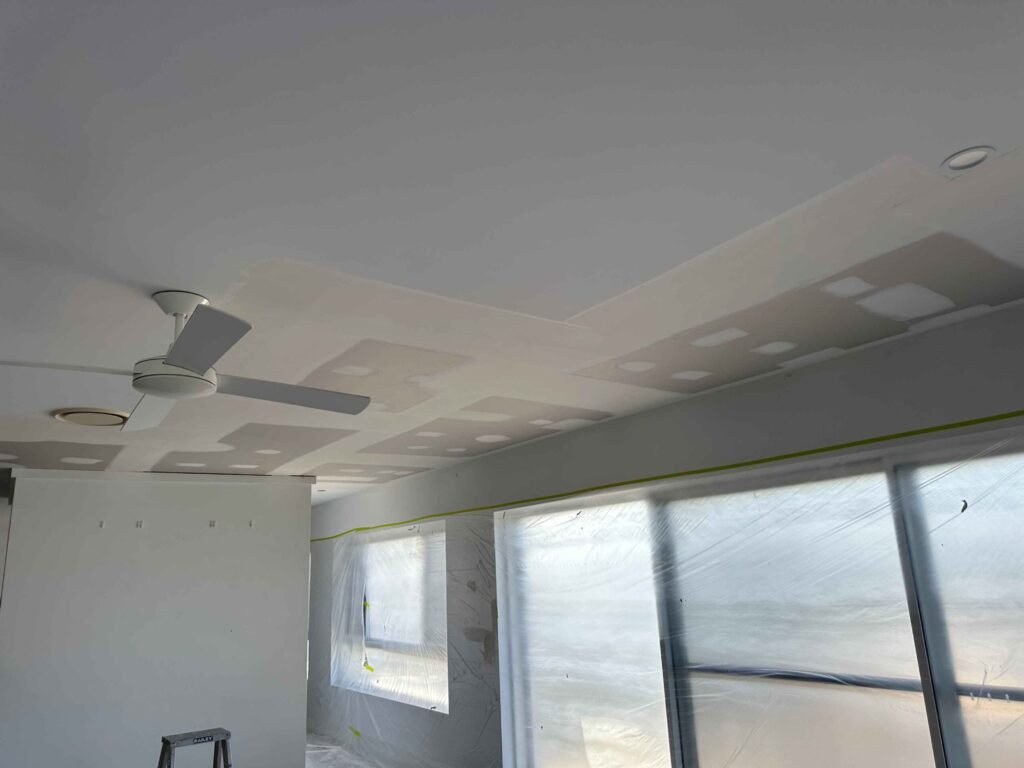
1. Inspection and assessment. We check how far the damage extends, test how much of the plasterboard has lost its strength, and look at the condition of the ceiling battens or framing. A stain on the surface can hide a much larger wet area, so we measure properly before quoting.
2. Removing the damaged section. Any soft, swollen or sagging plasterboard is cut out cleanly. We cut back to solid framing so the new sheet has something secure to fix to.
3. Checking the cavity. With the section open, we look for lingering moisture, mould or damaged insulation. This is also a good chance to confirm the leak has really been fixed.
4. Installing new plasterboard. A new piece of gyprock is cut to size and screwed into place. For larger areas, a full sheet replacement gives a stronger, more even result.
5. Taping and setting the joints. Paper or mesh tape is applied over the joins, followed by several coats of base compound. Each coat is allowed to dry before the next, which is what prevents cracks from reappearing.
6. Sanding and finishing. Once the compound is dry, the surface is sanded smooth and feathered out so the repair disappears into the rest of the ceiling.
7. Matching texture. If your ceiling has a textured or stipple finish, we replicate it so the patch blends in. A smooth repair on a textured ceiling stands out once the light hits it.
8. Priming and handover. The ceiling is left clean and ready for paint. We walk you through the finished work and give you tips on painting and ongoing care.
Not sure whether your ceiling needs a patch or a replacement? Our team will inspect it and explain your options plainly. Get your free quote online or call 0448 855 372.
Patch Repair or Full Replacement?
Small, localised damage, such as a stain from a one-off leak, can usually be fixed with a patch. Larger repairs are more likely when:
- The water damage covers a big section of the ceiling
- The plasterboard has sagged or lost its strength across a wide area
- The ceiling has been wet multiple times
- Mould has spread through the sheet
- Joints have failed repeatedly
In these cases, replacing the affected sheets is often the better long-term investment. It costs more up front than a small patch, but it avoids repeat repairs. During your inspection, we’ll tell you which option suits your ceiling and why.
A Quick Note on Older Homes
If your home was built before the late 1980s, older ceiling materials may contain asbestos. Don’t sand, scrape or drill into suspect material yourself. Have it assessed by a licensed professional first, and only proceed once you know it’s safe. It’s a small precaution that protects your family and your tradies.
How Long Does a Repair Take, and When Can I Paint?
Small patch repairs can often be completed within a few hours, while larger ceiling sections may take one to three days. Most of that time is drying between coats of compound, which can’t be rushed without affecting the finish. Once the surface is fully dry and sanded, it’s ready for primer and paint.
A few things affect timing: the size of the damaged area, whether the framing needs repair, humidity on the day, and how much texture matching is involved.
DIY or Professional?
It’s tempting to grab a patch kit and have a go, and for a tiny nail hole that’s fine. Water damage is different. Ceiling work means working overhead, dealing with heavy wet sheets and getting joints and texture to blend invisibly. Visible ridges, hairline cracks and ghost outlines are the most common signs of a DIY ceiling fix. A professional repair gets it right the first time and saves you the frustration.
Why Choose Smith Plastering & Renovations
We’re based in Taree and proudly serve homes and businesses across NSW, including Sydney. With over six years of experience in gyprock and plastering Sydney clients can trust, our approach is simple: listen carefully, inspect properly, quote clearly and deliver tidy work.
That’s what our customers tell us, too. One client described our ceiling repair as immaculate and easy to paint over, and another said the finish was absolutely perfect. We put that down to clear communication, dust control during the job and a full clean-up afterwards.
Whether you need a small patch, a full sheet replacement or a complete ceiling renovation, our team brings the same standard of craftsmanship to every job.
Ready to Fix Your Water-Damaged Ceiling?
A water-damaged ceiling won’t fix itself, and the longer it’s left, the bigger the repair becomes. Our team can assess the damage, explain your options and give you a clear, itemised quote with no obligation.
Contact Smith Plastering & Renovations today for reliable gyprock ceiling repairs Sydney homeowners can count on.
- Call: 0448 855 372
- Email: smith_plastering@outlook.com
- Book your free quote online
You can also learn more about our ceiling repairs and gyprocking services.
FAQs
1. Can a water-damaged Gyprock ceiling be repaired without replacing the whole ceiling?
Yes, minor water damage can often be repaired by removing the affected section, installing new plasterboard, and finishing the joints. However, extensive sagging, mould or weakened plasterboard may require replacing larger sections.
2. How much does Gyprock ceiling repair cost in Sydney?
The cost depends on the size of the damaged area, the extent of the water damage, access to the ceiling and the finishing required. An inspection helps determine the most suitable repair and provide an accurate quote.
3. How long does water-damaged ceiling repair take?
Small ceiling patches may take a few hours of repair work, while larger repairs can take one to three days or longer. Drying time between plaster compound coats and any additional structural repairs can affect the overall timeline.
4. Do I need to fix the leak before repairing my ceiling?
Yes. The source of the water damage must be identified and repaired before the ceiling is restored. Otherwise, moisture may damage the new plasterboard, cause fresh stains or encourage mould growth.
5. Can a water-damaged ceiling develop mould?
Yes. Moisture trapped in plasterboard, insulation or the ceiling cavity can encourage mould growth. The affected area should be assessed, the moisture source addressed, and any mould handled appropriately before the ceiling is repaired.
6. How do professionals make a ceiling repair blend in with the existing ceiling?
Professional plasterers install new plasterboard where needed, tape and set the joints, apply finishing compound, and sand the surface smooth. They can also match the existing ceiling texture to help the repaired section blend in.
7. Can I paint my ceiling immediately after Gyprock repairs?
No. The plaster compound must dry completely before sanding, priming and painting. Painting too early can affect the finish and may lead to visible patches or uneven results.
8. When should I replace a water-damaged ceiling instead of patching it?
Replacement may be necessary when the plasterboard is extensively sagging, soft, mould-affected or repeatedly damaged by leaks. A professional inspection can help determine whether a localised patch or a larger replacement is the better long-term option.
9. Is it safe to repair a sagging ceiling myself?
A sagging ceiling can be dangerous because waterlogged plasterboard may fall without warning. Keep people away from the affected area and arrange a professional assessment. If you suspect asbestos in an older ceiling, do not cut, drill or sand it before professional assessment.
10. Does Smith Plastering & Renovations provide ceiling repairs in Sydney?
Yes. Smith Plastering & Renovations serves homes and businesses across NSW, including Sydney. For water-damaged ceiling repairs, Gyprock patching or ceiling replacement, call 0448 855 372 or request a free quote online